Tire service & wheel alignment
Protect the tire. Restore the track.
Tread condition, wheel balance, steering wear and alignment measurements tell different parts of the same road-behavior story.
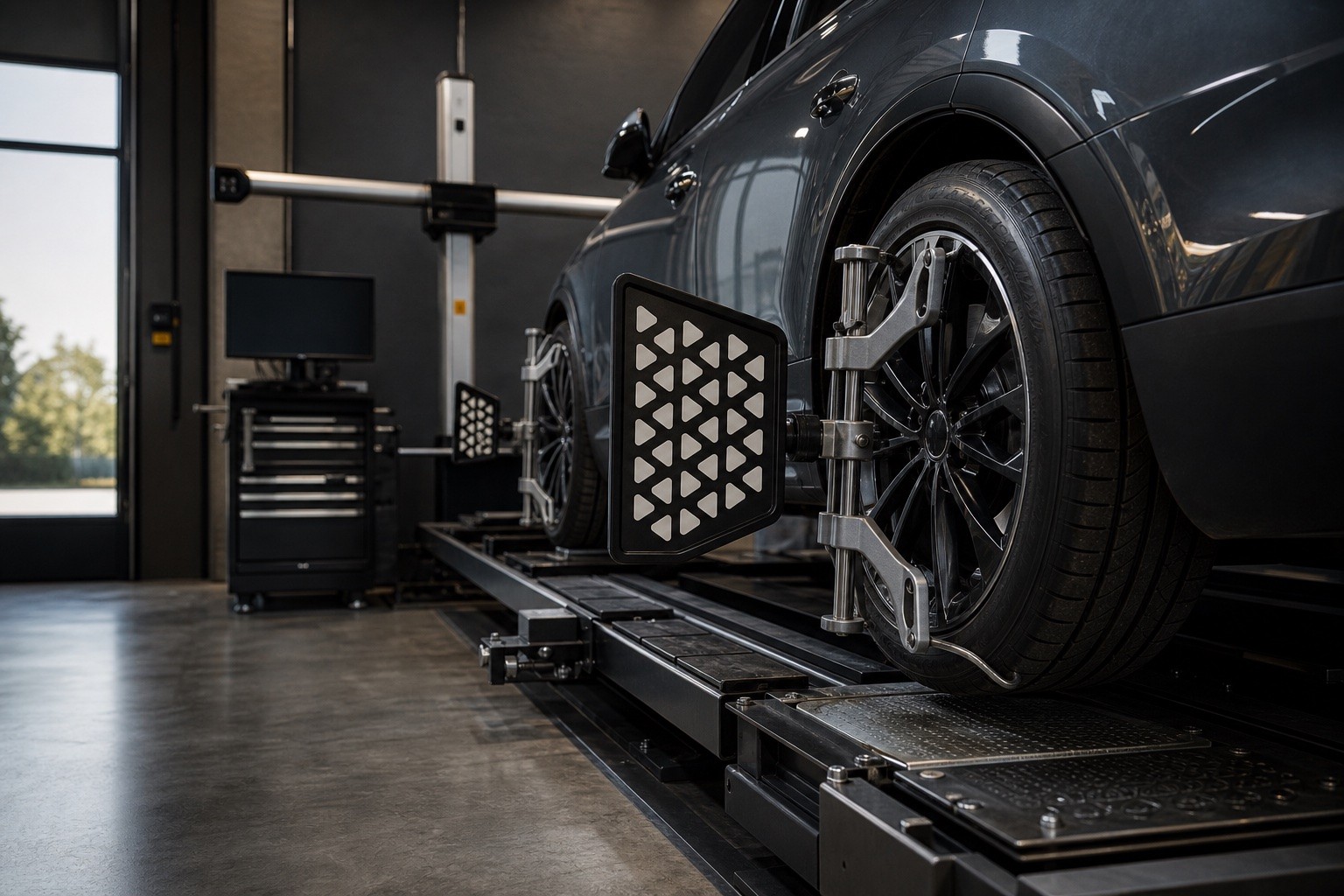
Documented condition
Wear pattern · measured geometry · final recheck
Visible tire damage can change the next step.
Do not continue driving on exposed cords, a sidewall bulge, rapid pressure loss or severe impact damage. Call to discuss a safe arrival option.
Scope before parts
Tires explain their history through wear.
Pressure, tread pattern, balance, wheel condition and steering wear should be considered before alignment numbers are adjusted.
01
Confirm the concern
Capture the symptom, vehicle context and desired outcome.
02
Test the system
Use inspection and measurement to narrow the actual cause.
03
Write the scope
Explain the finding, options and total before authorization.
Estimate logic
Tire repair depends on damage location and condition. Alignment adjustments are quoted after the initial inspection and measurement.
Written scope and approval before repair work begins.
Before-and-after geometry
The final reading should show what changed.
This example uses descriptive states rather than pretending that one set of numbers applies to every vehicle.
Illustrative alignment report
Illustrative service example—actual findings, specifications, and recommendations depend on the vehicle and documented inspection.
01
Wear
What changed and under which conditions
02
Measure
The measurement or inspection performed
03
Correct
What the evidence supports
04
Confirm
Approve, ask, plan or decline
Put the wear pattern to work
Tell us whether the concern is wear, vibration or tracking.
Confirm the vehicle and tire size when possible so the shop can prepare the right next step.