EVIDENCE ARCHIVE · SAMPLE CASES
From symptom to supported decision.
See how a driver concern can move through testing, documented evidence, a clear decision and post-work verification—before any recommendation is presented as certain.
DIAGNOSTIC RECORD
01—04
A repeatable path from observation to proof.
01
Reproduce the concern
02
Measure the system
03
Support the decision
04
Confirm the outcome
Observations, measurements and authorizations stay separate in the record.
RESULTS DIRECTORY
Every conclusion should have a trail.
WHAT EACH FILE SHOWS
Driver concern → tests performed → evidence summary → supported decision → approved work → verification.

Sample result · Brakes
Sample case study
Brake vibration traced to front rotor variation
A structured example showing how a reproduced brake vibration can move from symptom to measurement, supported decision, and verification.
Illustrative 2019 midsize crossover
Sample data · 64,000 miles
Fictional composite created for this sample site. It is not a real customer record, repair order, diagnosis, or guarantee of outcome.
Open case file

Sample result · Electrical
Sample case study
Intermittent no-start isolated through voltage-drop testing
A fictional diagnostic sequence that avoids replacing a starter or battery until the circuit behavior supports the decision.
Illustrative 2017 compact sedan
Sample data · 91,000 miles
Fictional composite. Values, vehicle details, and decisions are illustrative and are not a real diagnosis or repair guarantee.
Open case file
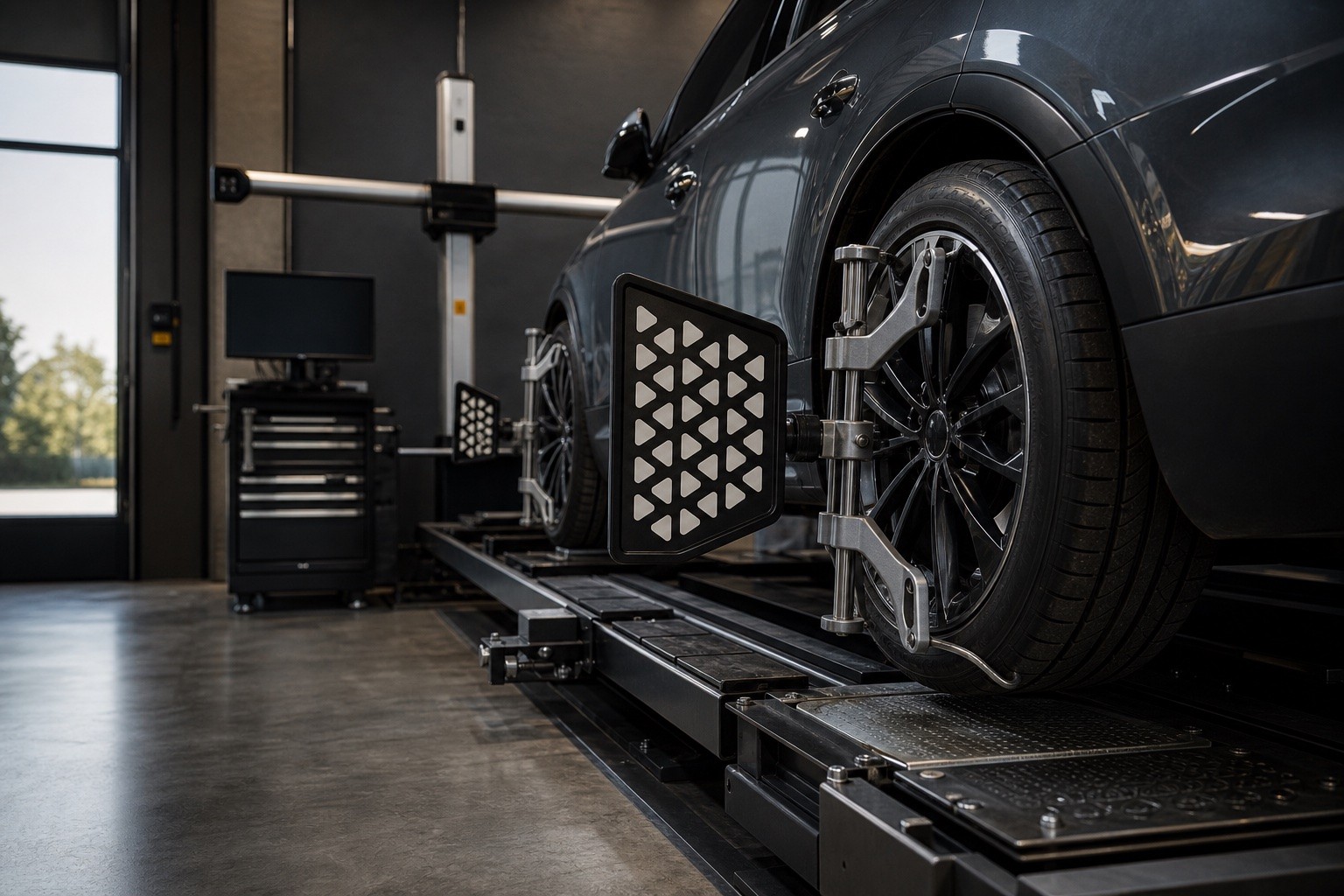
Sample result · Tires
Sample case study
Uneven tire wear connected to alignment and inflation history
A fictional inspection that separates visible wear, measured alignment, and inflation history before recommending the next step.
Illustrative 2020 small SUV
Sample data · 48,000 miles
Fictional composite. It does not represent a real customer, vehicle, measurement, or guaranteed result.
Open case file
THE EVIDENCE STANDARD
A result is more useful when the path is visible.
Good case documentation separates what the driver noticed from what was measured, what the evidence supports from what was authorized, and the completed work from the final verification.
01 · CONCERN
Capture the symptom
Record when it happens, what changes it and what the driver actually experiences.
02 · TEST
Measure the system
Use the inspection or test that can separate the likely causes—not the fastest guess.
03 · DECIDE
Explain the decision
Show what the findings support, what they do not prove and which option was approved.
04 · VERIFY
Confirm the outcome
Retest the original concern and document the condition after the approved work.
START WITH WHAT YOU NOTICE
Bring the concern. Ask to see the path.
Describe the change you noticed. The next useful step is confirming the inspection path—not guessing at a repair online.