DEMO
Sample educational content. It is not a tire inspection, fitment recommendation, or assurance that a vehicle is safe to drive.
Tire wear records how the tire has been loaded, inflated, steered, rotated, and driven over time. The visible pattern can guide an inspection, but it does not identify a single cause by itself.
Compare more than one spot
Measure inner, center, and outer tread on each tire. Compare left to right and front to rear. A single photograph or one tread-depth number can hide an important pattern.
Pressure history matters
Use the vehicle placard specification as the starting reference when tires are cold. Repeated underinflation, overinflation, heavy loading, or a slow leak can affect wear and heat.
SAFETY NOTE
Do not keep driving on a tire with rapid air loss, visible cords, a bulge, severe vibration, or major impact damage. Move to a safe location and seek qualified help.
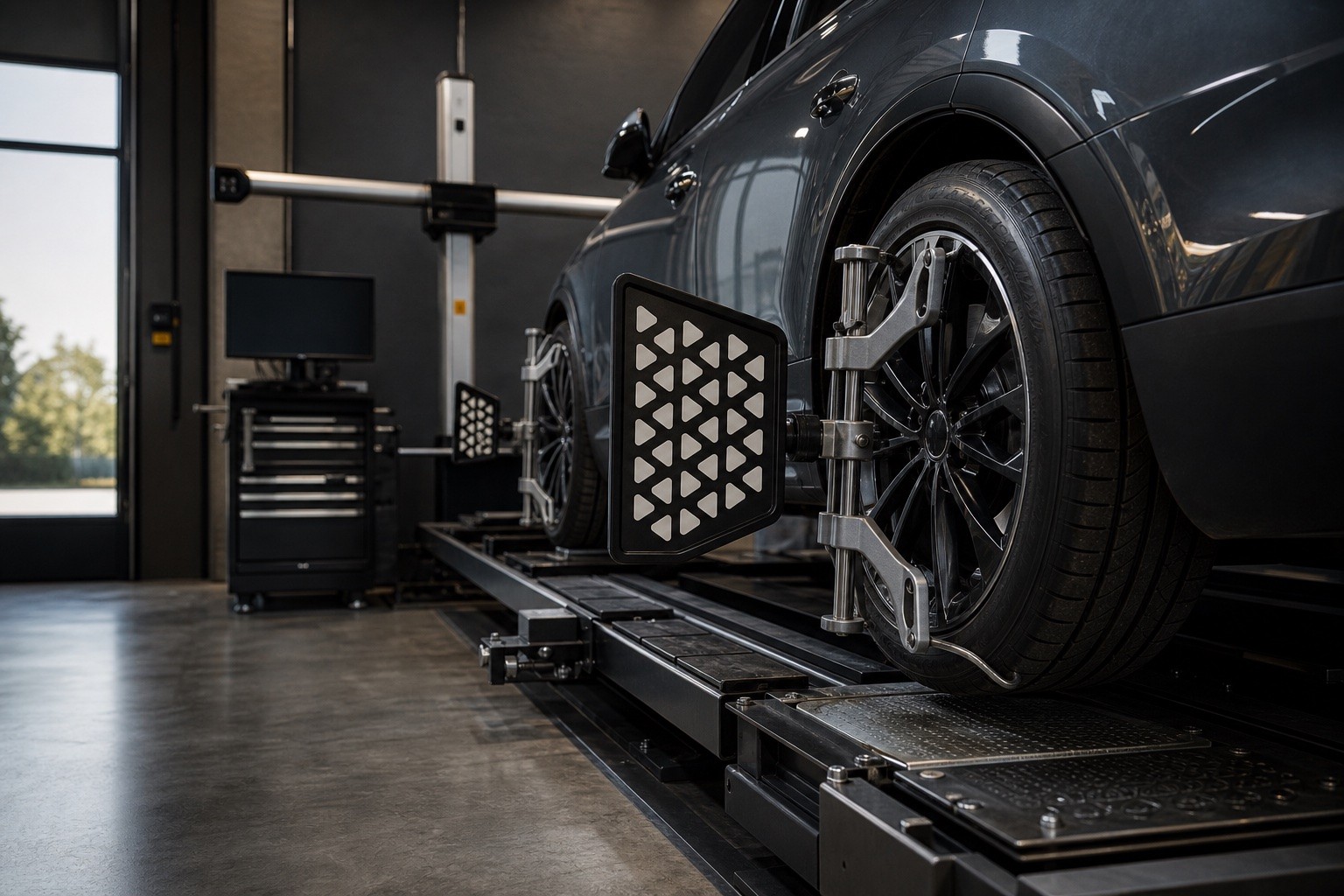
Alignment is measured, not guessed
Pulling, an off-center steering wheel, or edge wear may justify an alignment check, but suspension and tire conditions should be inspected first. The before-and-after readings show what was adjusted.
Age and damage change the decision
Remaining tread is only one factor. Sidewall damage, puncture location, exposed material, irregular wear, repeated air loss, vibration, and tire age may change whether a tire can remain in service.
KEY TAKEAWAY
Use the wear pattern to choose the next inspection, then make the decision from the complete condition and measurements.
Signal Ridge Auto Care · Education Desk